
Most companies don’t struggle because they lack substance—they struggle because their signal never comes through
By Brian A. Smith, CEO, The Main Stage
I’ve spent most of my career sitting across from people who built something real—and couldn’t get anyone to feel it.
Founders, mostly.
Not because the ideas weren’t strong.
Not because the timing was wrong.
But because the signal never came through.
And once you see it, you can’t unsee it.
Founders and Bands Are Solving the Same Problem
Not how to explain what they do—
but how to be heard.
In music, it doesn’t take long to know if something grabs you. Sometimes it’s just a progression, a tone, a feeling.
Sting once described hearing a simple set of chords and knowing something was there—before even knowing what it meant.
Founders experience the same thing in reverse. Investors often decide within moments whether to lean in or move on.
And I didn’t learn this from theory.
I learned it by working alongside someone who has spent a lifetime doing it.
Jerry Harrison—Grammy Award–winning artist—approaches storytelling differently. It isn’t messaging to him.
He thinks of it as structure.
As a member of The Rock and Roll Hall of Fame band Talking Heads—and as a producer of records like Live’s Throwing Copper (which sold over 8 million copies), along with work with No Doubt and Violent Femmes—he’s lived inside what it means to take something raw and make it unmistakable.
Not louder.
Not more complex.
More itself.
And that distinction matters.
Because most founders don’t need more story.
They need clarity about what their story already is.
You Don’t Have a Story Problem. You Have a Signal Problem.
Most founders think they need a better story.
They don’t.
They have too much story.
Too many entry points.
Too many explanations.
Too many ways to be understood.
From the inside, it feels responsible. Complete. Even necessary.
From the outside, it feels like noise.
And investors don’t respond to noise.
They respond to signal.
What Signal Actually Means
When I say “signal,” I don’t mean messaging.
And I don’t mean simplification for its own sake.
Signal is the smallest possible expression of a company that still produces correct understanding and emotional recognition in someone else’s mind.
A story can be complete and still fail.
Signal can be incomplete and still work.
Because signal isn’t about coverage—it’s about recognition.
If someone hears it once and can repeat it back accurately, understand what matters, and feel why it exists—you have signal.
If they need explanation, context, or clarification—you still have story.
Most founders are working hard to expand their story.
The real work is compressing it until the signal inside it becomes unmistakable.
Why Pitch Decks Fail (Even When the Business Is Strong)
We still rely on pitch decks as if they can carry narrative weight.
But they weren’t built for that.
They compress identity, tension, and direction into static slides.
What gets lost is what matters most:
The thing that makes the company recognizable.
It’s like handing someone lyrics without performance, rhythm, or voice—and expecting them to feel the song.
They won’t.
Telling Stories of People Who Already Have One
Over time, this has become the throughline in my work:
Telling the stories of people who already have one—and making sure the world can actually hear it.
That’s what I’ve enjoyed most about my role as CEO of The Main Stage.
And it’s what I experienced earlier at RedCrow—building alongside Jerry in one of the earliest attempts to translate healthcare innovation into narrative form that investors could actually engage with.
Because once you’ve seen how a band becomes something people feel, you understand something most startup worlds miss:
Attention doesn’t go to the most detailed explanation. It goes to the clearest signal.
Before Startups, I Was Already Seeing the Pattern
At Reebok, I learned something quickly:
A product doesn’t win because it exists.
It wins because people understand what it means.
You can have performance, innovation, even category leadership.
But if the story doesn’t land, none of it matters.
At the time, I didn’t call that storytelling.
I just knew when something resonated—and when it didn’t.
Looking back, that was already the work:
Separating signal from noise.
The Band Room and the Startup Room Are the Same Room
When Jerry and I co-founded RedCrow, that overlap became impossible to ignore.
Because in both music and startups, the question is identical:
What is already here—and how do you make it unmistakable?
Not invented.
Not expanded.
Refined.
That’s the work.
And it shows up in different ways depending on who you talk to.
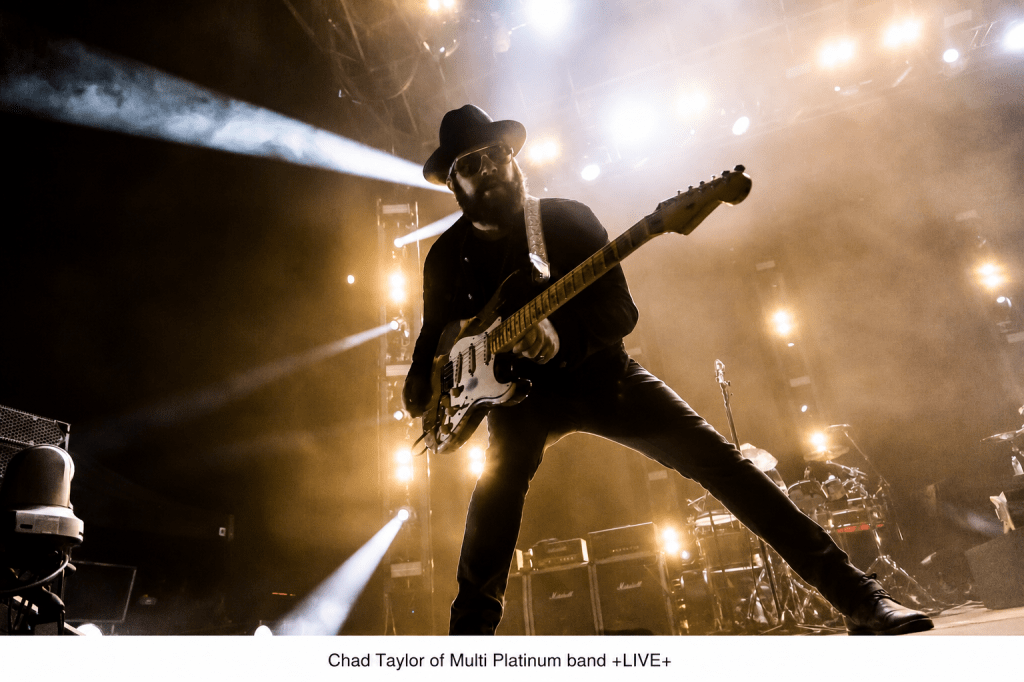
Chad Taylor, founding member and lead guitarist of LIVE once described stepping from a band that had already sold millions of records into a startup environment:
“My band had already sold millions of records when I first contemplated joining forces with a start-up film company. What I found… was a group of founders who, much like my band, shared a passion for a collective goal and vision.”
That’s the part people miss.
It’s not about industry.
It’s about alignment.
Same human problem. Different medium.
The Story Isn’t Just Told—It’s Controlled
I recently sat with Jerry watching early Talking Heads footage from the ‘80s, alongside the rise of MTV.
What stood out wasn’t just performance.
It was intentionality.
At a time when most bands outsourced visuals, they treated video as part of the core narrative.
Because MTV wasn’t just distribution.
It was perception.
And whoever controlled perception controlled what the audience believed they were seeing.
Startups are in the same moment today.
Different platform. Same stakes.
When the Signal Finally Lands
One of our customers, Charles Mohr, founder and CEO of ADAPT GROUP described the experience this way:
“The Main Stage team provides a phenomenal list of questions… allowing me, as the founder, to retrace my footsteps from inception to present. They brought our company’s story to life—and a greater sense of gratitude to fully see the journey we’ve been on.”
That idea—looking up long enough to see the story you’re already inside of—is the work.
Not inventing narrative.
Removing what obscures it.
What We Actually Do
At The Main Stage, we don’t build stories.
We don’t layer messaging.
And we don’t coach founders to sound better.
We listen long enough to find what is already there—
and remove everything that prevents it from being recognized.
Sometimes that means collapsing five ideas into one.
Sometimes it means identifying the one tension that actually matters.
Sometimes it means letting go of language founders are attached to.
Not because it’s wrong—
but because it hides the signal.
When the Signal Lands, Outcomes Change
There’s a moment I’ve seen repeatedly.
A founder starts wide.
We narrow it.
They resist it.
Then refine it.
And something shifts.
Not the business.
The perception of the business.
And when that happens:
- Conversations shorten
- Investors stop needing translation
- Momentum builds earlier in the process
- Conviction forms faster
Because people don’t invest in what they have to decode.
They invest in what they immediately recognize.
Closing
Every founder already has a story.
Most are just too close to it to see the signal inside it.
The work—whether in music or startups—is the same:
Find the signal.
Remove what isn’t it.
Make it unmistakable.
Because companies don’t win because they say more.
They win because they’re understood sooner.
And what’s understood—
gets remembered,
gets repeated,
and eventually gets funded.


Leave a Reply