
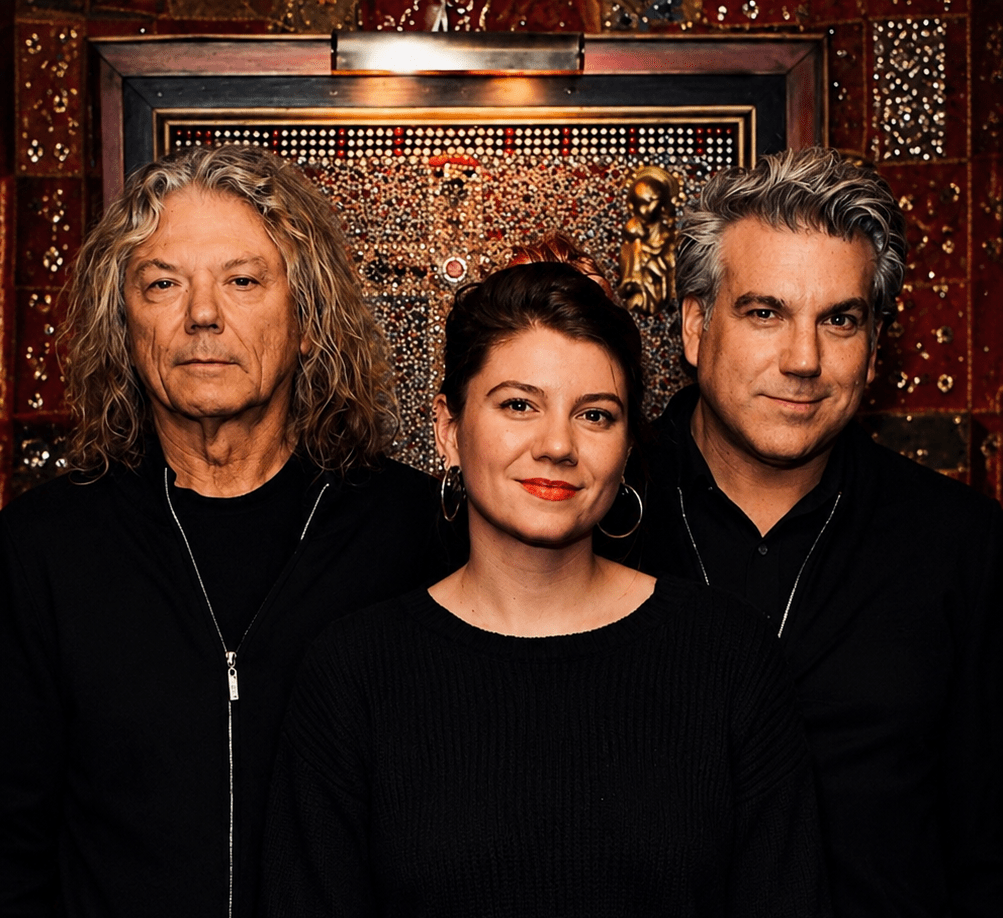
By Brian Smith, CEO, The Main Stage
We talk a lot about investing in people.
Usually, we mean it from the investor’s perspective. When someone puts money into a company, they are placing trust in the founders and executive team. They are betting that those people will make the right decisions, build the company, and ultimately create a return on that investment.
But there is another investment in people that may be even more important: the people founders choose to go into business with.
I have come to believe that choosing a co-founder or partner may be one of the most consequential decisions an entrepreneur ever makes.
And I don’t mean simply because the company might succeed or fail.
Success itself can test a partnership.
Who gets credit? Who stays after an exit? Who believes they were responsible for landing the account, raising the money, building the technology, or creating the opportunity? What happens when a licensing deal or acquisition appears and one founder suddenly decides their contribution was worth more than everyone else’s?
None of those questions seem particularly urgent at the beginning.
At the beginning, everyone is excited. You have an idea you believe in. Your talents may be different, which makes the partnership feel even stronger. Other people may doubt the dream, but you and your co-founder believe in it.
There is an us-against-the-world quality to it. Together, you’re going to build the next unicorn.
Then things get hard.
And they will get hard.
Money is harder to raise than expected. Sales take longer. The technology has bugs—or needs to be rebuilt entirely. A key employee quits. Personal finances get stretched. A spouse or partner starts asking difficult questions at home.
Then, sometimes, success arrives.
And success can create its own problems.
After all the sacrifice required to get there, the founder who raised the capital, landed the major customer, or created the software may start thinking: I’m the reason this worked.
That is where relationships can fracture.
I have heard the stories, and I have seen it firsthand.
Which is also why I appreciate what I have had with my own co-founders.
I have worked with the same partners for more than five years, and with one co-founder for more than twelve years and across two companies. It is a relationship I rarely have to think about because, like a good marriage, there is respect.
We have voices. We disagree. But we disagree respectfully.
We go out of our way to include one another in important decisions, and we lean on each other when things get difficult. I have never stopped feeling like we are the united front we were when we started. If anything, that feeling has strengthened.
We know our roles. We know what we know, and we know what we don’t know.
We succeed together, or we go down together.
I often wonder why our partnership has worked when so many others don’t.
Maybe some of it comes from experiences we had long before becoming entrepreneurs.
For me, I think about sports.
I played team sports, and at a young age I started playing quarterback. I was responsible for running an offense while understanding what ten other people on the field were supposed to be doing.
I had to keep my offensive line motivated to protect me. I had to help teammates move past bad plays. And I had to move past my own mistakes quickly, because the last thing a quarterback can do is show everyone else that he is still stuck in his head over the previous play.
I also learned early that a touchdown pass is never just about the quarterback.
Someone had to make the catch. Someone had to run the route. And an offensive line had to protect long enough for the ball to be thrown.
The older I get, the more similarities I see between what happens on a football field and what happens inside a startup.
For my other two co-founders, particularly Jerry Harrison, there is another analogy:
Rock and roll.
Perhaps being in a band is one of the closest things to being in a startup.
Jerry joined a band where three other members were already in place and helped round out a foursome that would eventually become worthy of the Rock & Roll Hall of Fame.
Think about the personalities involved in keeping a band together.
Who gets songwriting credit? Who chooses the album art? Who names the songs or the album? Who produces the record? Which tours do you take? Decades later, how is the band and its work commercialized?
Those decisions involve money, creativity, identity, recognition, and ego.
Sound familiar?
Through friends in the music industry, I have heard another phrase for what can happen when things go wrong:
LSD: Lead Singer Disease.
It happens when the lead singer forgets how the band got there. They forget the neighborhood garage, the high school music room, or the first dive bar willing to let them play a set.
The startup version isn’t much different.
The extroverted founder-CEO appears on webinars and podcasts. They speak at pitch events. They become the public face of the company and maybe the person raising the capital.
Eventually, they look around and think:
I did this. Everyone knows me, not my co-founders.
They forget the late nights and early mornings. They forget the terrible flights in coach to obscure cities. They forget the people beside them when there was no audience, no money, no recognition, and no guarantee that any of it would work.
Whether it happens in a band or a startup, when one person begins believing they are bigger than the group, it can be the beginning of the end.
I learned another version of this lesson much earlier in my career.
I was working in wealth management at a well-known firm during the financial crisis. I was a new financial advisor and was gaining momentum at a time when many others were struggling.
But I believed I could do more with a team. A team could serve larger accounts and families, and I still believe strongly in that model today.
So I left.
I joined another established firm to work alongside a successful advisor and his team—one of the top advisors in the Boston market. I believed he had the infrastructure I needed. More importantly, I believed he would have my best interests in mind and help me succeed.
I thought I had found the perfect partner.
Instead, he used my ability to generate new leads while making it increasingly clear that he did not view our relationship the way I did.
I had been willing to walk away from my momentum because I believed in the partnership.
I picked the wrong partner.
And there was one more complication.
He was my uncle.
That experience taught me something I have carried with me ever since: there is no simple formula for choosing the right partner.
I wish I could say it is family. I wish I could say it is your best friend from high school or graduate school. I wish I could say it is the investor willing to put up all the money but wants to become a co-founder in return.
It isn’t that simple.
The right partnership requires an unusual understanding of one another—and an equally important understanding of yourself.
You have to know your abilities and your limitations. You have to be honest about what you bring to the table and what you don’t.
And perhaps the hardest thing to predict is who someone will become when circumstances change.
What happens when success arrives? Do they take the credit and begin believing they are bigger than the common good?
What happens when things go badly? Do they disappear? Point fingers? Start looking for someone else to blame?
Our own founding team was tested.
Our first company operated in the relatively new world of crowdfunding in 2015, and the SEC decided to review and investigate how we were conducting our business.
We believed strongly that they weren’t going to find wrongdoing, certainly nothing we knowingly had done wrong. But knowing that doesn’t make an investigation easy.
It was enormously stressful for the business, our finances, and all of us psychologically.
It lasted more than a year.
If our relationship was ever going to break, that could have been the moment.
Instead, we rallied together.
There could have been finger-pointing. Someone could have bailed. Someone could have suggested shutting down the company and walking away.
We didn’t.
Eventually, we received a no-action letter. We kept building, stayed together, and ultimately reached an exit.
I rarely talk about that experience because it still frustrates me. But with enough distance, I have also come to see it as a badge of honor—not simply because of the outcome, but because of what it revealed about our team.
We stayed together when staying together was hard.
That matters.
I have watched partnerships implode. I have watched bands break apart because one person decided they deserved more credit than everyone else.
Meanwhile, I have been fortunate to have a founding team that has remained together for more than a decade.
Maybe the best partnerships are a little like the best marriages and friendships. Once you have experienced one that truly works, you understand what it feels like.
And if life eventually puts you in a position to build another partnership, you know what you’re looking for because you have experienced the formula firsthand.
So yes, investors invest in people.
But investing in people goes far beyond believing that a founder can execute a pro forma or business model.
Founders invest in people, too.
They invest years of their lives in one another. They put their reputations, finances, families, careers, and dreams alongside someone else’s.
Choose wisely. Think long term. Pay attention to the early warning signs. Don’t ignore someone’s reputation or track record simply because you’re excited about the idea—or because you love or trust them personally.
And remember this:
No company, organization, team, band, or family reaches its full potential once the relationships holding it together begin to fracture.
The moment one person decides they are bigger than the sum of the people who helped build it, the investment in one another begins to disappear.
And that may be the most expensive investment a founder ever loses.


Leave a Reply